

Dear Friends in Magic,
Some Museletters don’t arrive with answers. They arrive with a question that quietly follows you through the day, tapping you on the shoulder when you least expect it. The kind that asks not who you are, but what you’re waiting for.
This month’s Museletter is written by Mystery School Instructor Jonas Cain, whose work often lives at the intersection of storytelling, wonder, and personal courage. In this reflection, Jonas invites us to look closely at the moments where intention stalls, where discouragement whispers, and where the simplest choice to act can change everything.
Leap Year
by Jonas Cain
Grizzly bears are known as fierce predators, running up to 35 mph, lifting over 1,000 lbs, and having a bone-crushing bite even stronger than a lion. Yet, despite their reputation, grizzly bears are primarily foragers and scavengers, with approximately 85% of their diet being vegetation. They may be fierce, but their ability to adapt to available resources is what makes grizzly bears so successful.

Wasting Time
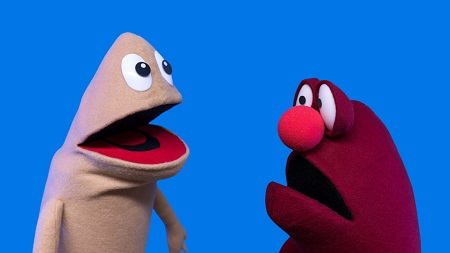
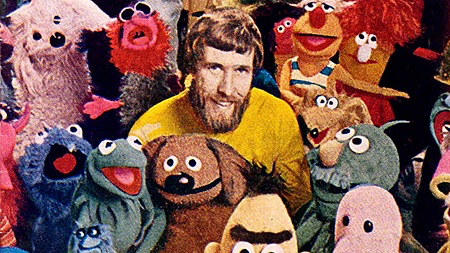
Meanwhile, at the University of Maryland, drama professor Rudy Pugliese asked a student, “Why are you wasting your time with those puppets?” Blunt, but fair. After all, serious adults don’t make a living with puppets, right?
And to be fair, even the student admitted he wasn’t taking puppetry seriously. I mean, it didn’t seem to be the sort of thing a grown man works at for a living. For him, puppetry was merely a placeholder until something better came along. He was patiently foraging for berries while he waited for the really good stuff to show up.
The Riddle of Life
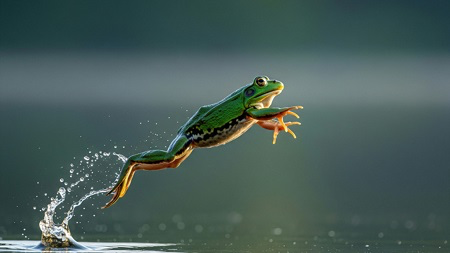
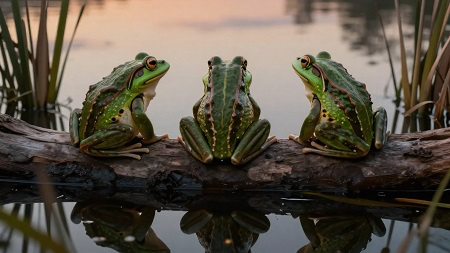
Across the pond sat three frogs on a log. One frog decided it was time to take a leap and swim in the water. How many frogs are left? The obvious answer is two. After all, if one decided to swim, that would leave just two, right?
Well, that’s where the riddle of life goes awry, for there are still three frogs on that log – because the frog only decided to leap, but never acted on its decision. The frog wanted the meat, and no amount of placeholders would do.
Why We Remain on the Shore
There are many reasons why we might remain on the shore of life, and for the sake of the Grizzly Bear and Frog, I offer two for consideration:
Discouragement from others, and refusing to make the first move.
Discouragement from Others
It’s curious what prompted the professor to discourage his student. Whether puppetry is a worthy pursuit or not is irrelevant. At the time, this student was making over $5,200 a year with his own television show and several commercial clients. In the 1950s, that was a good salary, (equivalent to nearly $70k today) especially for a college sophomore. Not bad for playing around with foam and felt. When someone tries to discourage you from doing whatever it is you are doing, it’s worth considering what their real authority is in the matter – and what they stand to lose if you succeed, or gain if you don’t.
As for the student, he took the discouragement to heart by leaving the puppet show and traveling to Europe in pursuit of something ‘more serious,’ thinking he might study graphic design as a commercial artist. On the other side of the pond, however, is where life’s riddle took another unexpected turn. He discovered there are serious adults who view puppetry as on par with painting and sculpture.
“In Europe,” he said in amazement, “everyone goes to puppet shows.”
This realization was a turning point. Up until then, he always had his professor’s question in the back of his mind: “Why are you wasting your time with those puppets?” Now he finally found an answer: he wasn’t.
When he returned home, he made his decision. “It was at that point I realized that puppetry was an art form, a valid way to do really interesting things…I came back from that trip all fired up to do wonderful puppetry.”
With that, Jim Henson leaped into the water and founded Muppets, Inc.
Refusing to Make the First Move
When playing chess, I prefer to play black. It didn’t occur to me why until I sat down to write this story: I don’t like making the first move.
The first move takes strategy, confidence, and risk. And, while making the second move also calls for such things, it is a lot easier on the heart and far less emotionally invested. Studies show that sometimes it only takes a few experiences with failure to develop learned helplessness – the belief that ‘nothing I do matters.’
On a personal note, I can trace my chess strategy to failed businesses that ended in bankruptcy, and failed romances that alternatively ended in divorce and death; a veritable zugzwang where any move appears to be a disadvantage.
On a positive note, I can take encouragement from the grizzly bear who thrives on only 15% of what he really wants, and takes advantage of the available resources to make up for the rest. If the bear refuses to make the first move, and instead waits around for the ‘right’ time and the ‘perfect’ circumstances, he will starve to death. Nothing is ever perfect, and that’s just as it should be. As Leonard Cohen sings:
“Forget your perfect offering;
There is a crack in everything,
That’s how the light gets in.”
As for the puppeteer, instead of allowing doubt to leave him on the shore, he made the first move – which is precisely what turned that frog on a log into Kermit the Frog.

Final Thoughts
As magicians, we can often face discouragement from others with variations on the same theme: “Why are you wasting your time with magic?” But we don’t have to quit the show and tour Europe like Jim Henson to discover that magic can be an art on par with puppetry, theater, and music – a valid way to do really interesting things.
Like the grizzly bear, it’s likely 85% of your time will be spent on things that may not inherently excite you per se, (the business side of showbusiness can often be the least exciting) but without the foraging and scavenging, you’ll never get the raw meat. The good news is if you have a gift you are excited to share, then there will always be an audience for you. “This is the paradox that we call the one-sided coin,” says Bashar. “If you have the head, the tail has got to be there. If you have the gift, then the receiver has to be there. Don’t deprive them by waiting too long to be yourself.”
This final thought is directed towards myself, (and you are welcome to eavesdrop):
Every day, you will be called to make the second move in response to life’s great riddle, but that doesn’t mean you only have to make second moves.
You already know enough strategies to get started. Just getting out of bed to face another day takes more confidence that you realize. And doing anything worthwhile always comes with a risk, but what can be even more painful is staying stuck where you don’t belong.
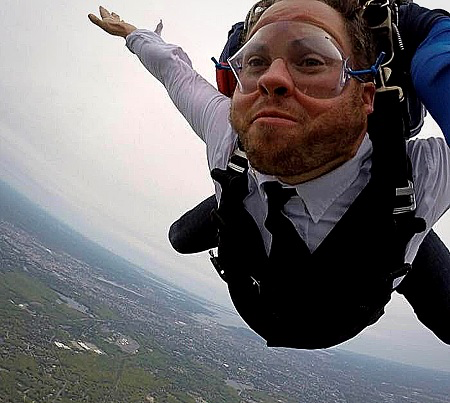
Don’t wait too long to be yourself. Make the first move. The next leap year isn’t until 2028, but that doesn’t mean you can’t make this February a leap year anyway.
Why are you wasting your time? Your move!
Want More?
Jonas Cain, M.Ed. is a storyteller, magician, musician, and facilitator of fascination, helping people discover joy through curiosity and wonder. Connect with Jonas to discover more: jonas@hashtagpositivity.com