Dear friend,
It’s been too long since I’ve seen your face. Let’s change that.
How often do we really get to connect with each other? Not often enough. So, I’ll meet you halfway. I’ve set up a Zoom room where our friends can gather for a celebration and a sharing of our magic.
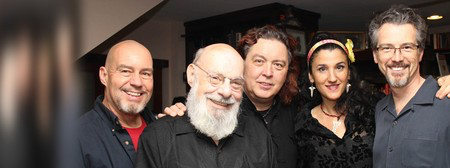
For twenty years, every single year, we’ve called our friends together for the Magic & Meaning Conference. People have called it the TED Talks of magic. This year we celebrate our twentieth, on November 6th–8th, 2026, and it will be online again, so you can join us from wherever you are in the world.
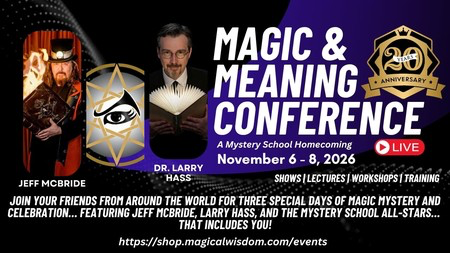
Whether you perform or not, this is a place to connect with me personally, and to meet some of my wonderful friends who will entertain, delight, and inspire you. Some of the top magicians in the world will be there. We’ll share sixteen of our PEP Talks (Performance, Entertainment, Philosophy), ensemble shows, break-out room conversations, new effects to learn, and ideas beyond tricks that are essential to the art of magic.
Everything is recorded, so you can watch whenever you wish… but drop in and say hello if you can!
Registration is $145, with a $70 minimum deposit to hold your place.
I’d love to see you there. Come and be part of the mystery.
With warmth and wonder,
Jeff McBride
McBride’s Magic & Mystery School
Register by CLICKING HERE.
Wow, look at this video. It is a blast from the past!
The highlights will give you the shadows.
The shadows will give you the method.
And the method will give the dream to your audiences.
– Tommy Wonder, The Books of Wonder
The first magic books I read were The Books of Wonder, and when I came across these words by Tommy Wonder, I was not only inspired, I realized that he had described the way I feel about my notebook.
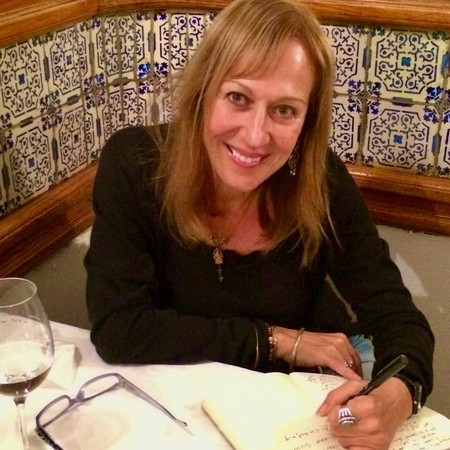
Let me start at the beginning. On my ninth birthday, my parents gave me a small blue diary with a lock on it. On the first page, I wrote: I want to be a writer. That never changed, though the diary/journal/notebook did. This little diary had a lock you could spring with a fingernail, but it was crucial because it said: No trespassers! This is Ruth’s world, and no one else is allowed in. I’ve kept countless notebooks since then, of all sizes so I can carry them when I travel. My new lock is that no one can read my handwriting but me, and sometimes I can’t decipher it either.
My wonder-full magical friends, you have been my muses for years. Maybe in return, I can encourage and inspire you by sharing how I keep a daily notebook.
The Shadows…
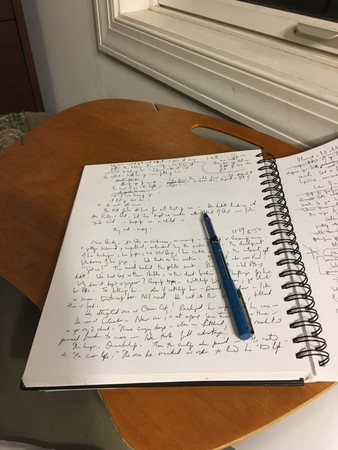
I write every morning, fresh from dreams, a cup of coffee in one hand, pen in the other. I write by hand in sketchbooks, no lines, no screens, nothing but my pen tracing shadows across the white pages. The act is intensely physical and sensual–the same quiet craft a magician practices alone with cards or coins long before the lights rise. I hug this private world between the covers of my notebook, and keep it intimate and mine for as long as I can, until the story, like a finished effect, threatens to burst free and live in front of others.
I’m not trying to make sense, not yet. I’m just trying to get fragments, words, images down in a safe place where the imagination roams free. As I write, I get into a groove, following a rhythm. Typing is something I do with my head. Handwriting is something I do with my hands. I believe that for magicians, much of your art lives in your hands. You know things through them that you cannot say out loud. You may have had a move solve itself while your hands worked, and your mind was elsewhere. You weren’t thinking about it, and then it was simply done, and you couldn’t have explained how.
Handwriting is closer to that than a screen will ever be. When I write longhand, I’m not describing a thought I already had. I am like a detective searching for clues. I don’t know the solution. I don’t even know exactly what the mystery is about, but I recognize a clue when I stumble over it. I pick it up and examine it in the light, and that leads me to the next clue. A detective groping in the dark, bumbling and blind, yet given moments of grace, a door blows open, light shines on a hidden path, and a whispered word lures me around the corner. I have no idea where it will lead, but I’m up for the adventure.
The Method…
Now I begin to glimpse patterns, shapes, and forms that connect like pieces in a puzzle that I play with until I see the best way to fit them together. There is a lot of deep play here. I can play because this is still secret. No-one knows about it but me. I can be fearless and try anything, and if it fails, I pick myself up and try again. My goal is to transform the shadows, clues, images, memories, and ideas into something tangible that I can envision in the real world–the same way a magician assembles a sequence of moves, until the effect itself begins to feel inevitable.
Sometimes I sketch it out and see if I can find the underlying shape that holds it together. I layer theme, plot, and dialogue. Here is where I ask questions about the scene, story, screenplay, essay, or whatever it is I’m creating. What is it really about? Not only the characters or setting, but what am I working towards? What is the heart of the piece? What reactions do I want the reader to have when they finish? How can I build it to get that reaction? Magicians ask the same questions of a routine: Where is the real moment of magic? What must be cut so the audience feels only that?
I shape like a sculptor, cutting away unnecessary words, trying to get at the heart of the piece.
As you know, this stage can take not only days and months but years of working on it until the epiphany moment when you finally see what it’s all about–why you’ve been haunted by it, and why you need to finish it.
I guard this secret for as long as I can. Sharing too early can destroy the magic. When it’s ready to burst from the pages, I type it up, imposing order, blocking letters on my wild scrawls, and putting up fences and doors. I discover things I hadn’t noticed before, make new connections, and shift the order of fragments. I turn it into something whole.
The Dream…
This is the movement from personal to public. Now is the time to test the dream in daylight, and share it with others. Rehearse in front of the mirror. I read it aloud to see if the rhythm has survived the editing. Does it translate into the real world? Does the script match the motions? Does your audience react the way you hoped they would?
Every piece I write, including this one, begins in my notebook. If I skip this step, I find that my writing lacks the raw, wild energy that creation needs. It’s like planting a tree on the surface of the ground and ignoring the roots below. I suggest you keep a notebook–not merely to preserve tricks or plot ideas, but to record what astonishes you: an image, a question, a fragment of dialogue, an emotion, a gesture, or a moment that seems to point beyond itself. The notebook is where you catch the moment before it turns ordinary again. It holds the magic moments and keeps the mystery alive.
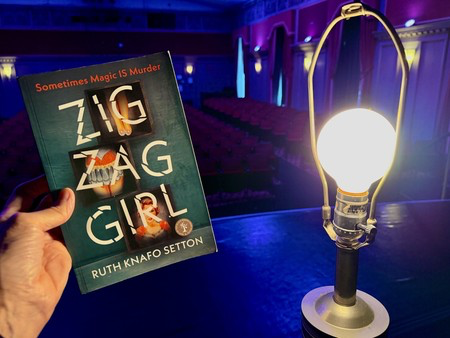
Wishing you all a lovely season of Samhain and witchery!
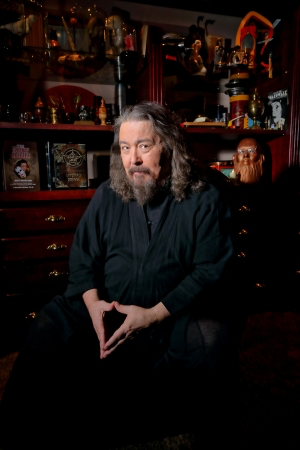
Q. Can a card trick really change a person’s life?
A. Yes! A card trick changed my life.
I Was Tricked Into It
I was seven years old and I knew, at that moment, what I wanted to do. Some people go their entire lives without finding their passion. I’ve devoted my life to following my passion and empowering others to discover theirs. It was a simple piece of magic, taught to me by Linda and Susan Van Etten. They were the same age as me, but somehow, they learned this amazing card mystery… it was called The Kings of Poker.
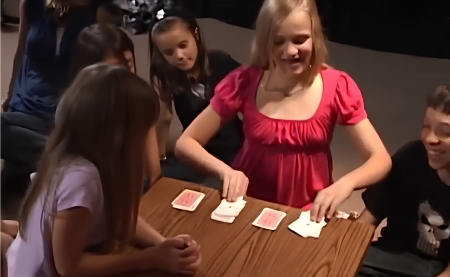
Kings of Poker had a story and everything. These two little seven-year-old girls told me a story I never forgot. I still perform it these days, knowing the impact it can have. If you’re curious, you can learn more about it here:
https://shop.magicalwisdom.com/l/street-magic/kings-of-poker
One Card Trick Can Change A Life!
Kings of Poker was the first card trick I remember, and I think it’s because it had a good story. That’s what made it memorable, and easy for me to practice. The trick itself is super easy to perform, self-working actually, and highly entertaining. Sixty years later, I’m still performing Kings of Poker. Sixty years later, I’m still working on pieces of magic I learned when I first started.
Powerful Impressions
This month at Wonderground, I am going to perform, for the very first time, two pieces of magic I’ve been working on for nearly sixty years. It’s about time I bring them to the stage. It’s never too late!

First Impressions
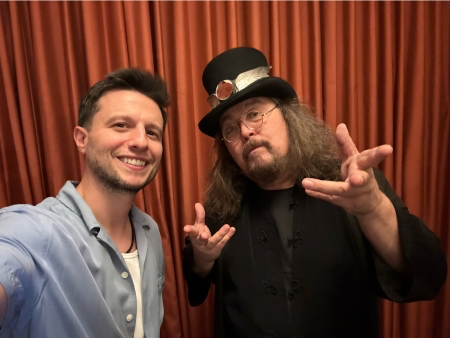
I encourage my students to go back to those very first powerful magic impressions they experience, and to recall them and to learn and perform those important pieces of magic that transformed their lives. Mat Franco actually shares the story about the first time he experienced card manipulation… it was me on the NBC television show World’s Greatest Magic!
A True Story
Each night Mat performs at his hit show, Magic Reinvented Nightly. Mat tells the story of the first time he saw a magician pull cards out of the air. That moment changed his life–one simple card routine… I am proud to say that that magician was me, and I am part of Mat’s story–the story he tells each night at the LINQ hotel here in Vegas. It’s a true story, and I’m proud to be a part of that story. The chain of magic continues, and the secrets of magic are passed down from teacher to student.
The Quest for Secrets
Magicians are secret-collectors. They are constantly looking for “the new thing.” This has led to an endless search for the latest and greatest, and often magicians are overwhelmed with the amount of literature, products, and distractions in the marketplace, chasing what Eugene Burger called “the tyranny of the new.” I’ve had good teachers, Eugene being the most important one of all. He told me, “The real secrets of magic are not in books or videos. They cannot even be purchased in a magic shop. The real secrets of magic are handed down from teacher to student… in whispers!” I’ve decided not to publish many of my secrets. I prefer to pass them on to my personal students, one at a time, or in very small groups. We meet Monday night at 7pm Pacific time, and we’ll see you in the classroom.
https://shop.magicalwisdom.com/m/magic-mystery-school
Keep inspired, my friends!
Jeff and Abigail
Dear friends in magic,
This month we offer a Museletter from Magic & Mystery School Instructor Daryl Rogers.
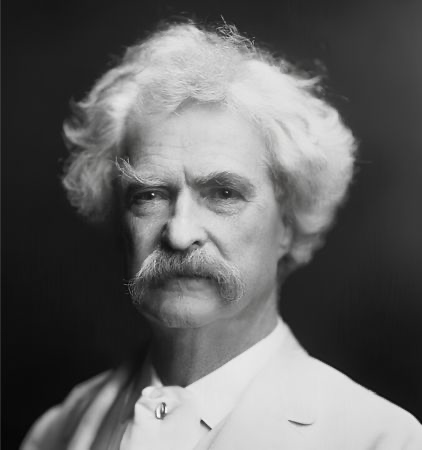
In June of 1897, newspapers across America carried alarming reports from London that Mark Twain was gravely ill, destitute, and near death. The stories painted a bleak picture of the beloved author, claiming that his health had failed, his brilliant mind had faded, and that the world had perhaps seen the last of his genius.
When a reporter finally reached Twain in London, he was somewhere between amused and annoyed. The stories, he explained, were greatly exaggerated. Twain was very much alive.
I can’t help but think of that story whenever the conversation turns to the future of magic clubs. Spend enough time around magicians and you’ll eventually hear someone declare that the magic clubs are dying. Membership is shrinking. Meetings are smaller. The average age keeps climbing. Young people don’t seem interested anymore. It’s an easy conclusion to reach, and on the surface, the evidence appears convincing.
But I wonder if we’re asking the wrong questions. Perhaps these familiar concerns are symptoms rather than causes. Before we write the obituary for organizations like the I.B.M. and the S.A.M., it might be worth taking a closer look at what we’re actually seeing. The future of magic clubs may not be nearly as bleak as we imagine – but understanding why requires us to separate perception from reality.
Perception: Magic Clubs Were Once Bigger
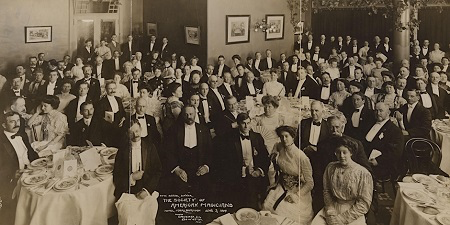
Many members look back fondly on the “good old days” when club meetings filled banquet rooms, conventions drew hundreds of attendees, and every city seemed to have an active Ring or Assembly. Compared to those memories, today’s attendance can feel discouraging. It’s tempting to assume that fewer members automatically means a weaker organization.
The reality is more complicated. Organizations like the I.B.M. and the S.A.M. were founded during an era when fraternal organizations flourished. Their structure reflected groups such as the Masons, Elks, and Rotary Clubs, where membership was made up primarily of established professionals and successful businesspeople. Joining a club was part of civic and professional life.
Society has changed dramatically since then. People have more demands on their time, more entertainment options, and more ways to connect than ever before. Measuring today’s clubs against the social norms of a century ago isn’t necessarily a fair comparison. The question isn’t whether clubs are as large as they once were; it’s whether they continue to provide value to the people who belong to them.
Perception: Our Members Are Getting Older
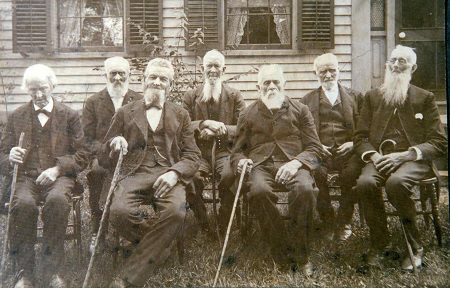
Walk into many club meetings and you’ll notice plenty of gray hair. It’s easy to conclude that the next generation simply isn’t replacing those who came before. If the average age continues to rise, some fear the clubs will simply fade away.
But perhaps that’s exactly what we should expect. Many magicians discover the art as children, then set it aside while careers, marriages, mortgages, and raising families take center stage. Magic becomes a treasured memory rather than an active pursuit. Years later, when life begins to slow down and disposable income and free time return, so do many of those same people. They dust off the props they packed away decades earlier and rediscover the wonder that first captivated them. Older members are not necessarily evidence of decline, they are often evidence of magic’s remarkable ability to call people home!
Perception: Young People Aren’t Interested in Magic
Perhaps the greatest concern is that younger generations simply don’t care about magic. If they aren’t showing up at club meetings, the assumption is that they must have moved on to other interests.
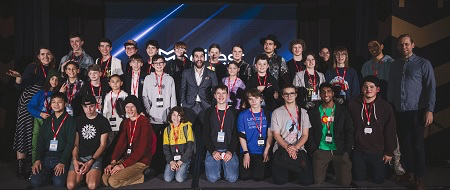
I don’t believe that’s true. In fact, I think there are as many young people fascinated by magic today as there have ever been. They watch performances online, learn from YouTube, buy effects from online dealers, attend conventions, and connect with magicians through social media. Their interest hasn’t disappeared, it has simply migrated. The challenge isn’t convincing young people to love magic. They already do. The challenge is helping traditional organizations become relevant to the ways this generation discovers, learns, and shares the art.
Looking Ahead
None of this means our clubs can afford to become complacent. Every organization should continually ask how it can better serve its members and welcome new ones. Change is inevitable, and successful clubs will be those willing to evolve while remaining true to their purpose.
But I remain optimistic. Magic has survived wars, depressions, changing technologies, and dramatic shifts in culture. It has adapted from vaudeville to television, from books to streaming video, from lecture halls to Zoom. Through it all, one thing has remained constant: people are still drawn to mystery, friendship, and the joy of sharing the impossible.
Perhaps the future of our clubs doesn’t depend on turning back the clock. Perhaps it depends on recognizing that the love of magic is still very much alive, it simply looks different than it did before. If we embrace that reality while continuing to welcome, mentor, and inspire one another, I believe the best chapters in the story of the I.B.M. and the S.A.M. are still waiting to be written.
Daryl Rogers
Green Bay, Wisconsin
September 2026