


I Can’t Believe I’m Doing This
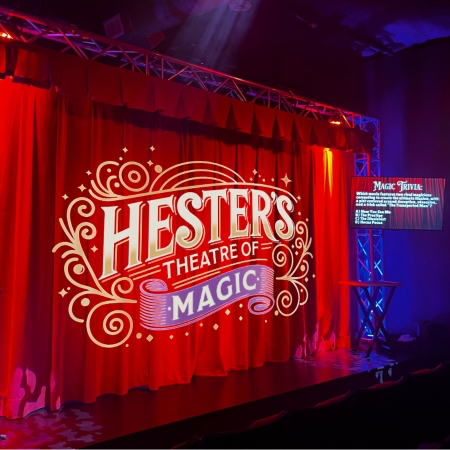
Two years ago, I did something a little crazy. After 15 years of performing professionally in the Dallas area, I opened my own magic theatre. I’m now two years in, having performed 350+ shows, winning multiple awards including Business of the Year, TripAdvisor Choice Award, and Most Romantic Spot. In this Museletter, I’ll share a few things I’ve learned along the way.
Why did I do it?
Like a lot of us, I grew up fascinated with magic. My first memories of magic were watching NBC’s World’s Greatest Magic on Television. The specials always came on a day or two before Thanksgiving, which turned it into one of my favorite holidays. I’d set the VCR, record the show, and watch Jeff McBride, David Williamson, and Lance Burton over and over again. Then my grandparents found the Queen of Hearts Magic Shop in Plano Texas where I’d get my first tricks: Jumping Gems and Card on Ceiling. I would go on to study Jeff McBride’s manipulation and Magic on Stage series on VHS and the journey was on.
At the age of twenty-one I became a police officer. I would go on to serve for twenty years before honorably retiring. It’s not an easy job. For the first few years you’re just focusing on surviving. Between working twelve-hour graveyard shifts, attending daytime training, court subpoenas, trying to do the job safely and professionally, all while striking a home-life balance. There wasn’t much time for magic. After the first few years, my career settled and I gained seniority to pick better shifts, and finally got into specialized units. This meant I had more time for magic. I was now doing small magic gigs on the side but undercharging and not realizing my potential. I certainly didn’t think owning a magic theatre was even remotely possible. I thought that’s what guys who headline Vegas casinos go on to do. I thought you’d need a huge team, a huge budget, or just win the lotto of luck to happen to be in the right place at the right time. A trip to Hot Springs would change all of that.
Hot Springs is one of my favorite towns, and where I’d later propose to my wife in the lobby of the Arlington Hotel, with “Will You Marry Me?” spelled out across the floor in hundreds of tealight candles. That’s a magical story for another time, but on this first trip, we were still dating. While exploring the town we found a little magic theatre, the Maxwell Blade Theatre of Magic. The venue was made up of two side-by-side retail storefronts with one side being the lobby and the other side the theater. It had around one-hundred seats, no bad seat in the house, and no matter where you sat, it felt like Maxwell was right in front of you. He tossed things into the crowd. People ended up on stage. The music and décor created a magical vibe the second you walked in. The magic featured sleight of hand, manipulation, small illusions, comedy, storytelling, and music. After the show, we left arm in arm, and as soon as we stepped out of the theater we looked at each other, and said almost at the same time, “We’re going to open our own magic theatre someday.”
Location, Location, Location!
Let’s jump even farther to the future. By 2022 I was seventeen years into my law enforcement career and had done it all: patrol, SWAT, robot and drone operation, School Resource Officer, Community Relations, and now Training Coordinator. My wife and I had been married for twelve years by then, and my retirement eligibility was three years off, and one dream was still left–our own magic theatre. So the research began.
It had to be in a touristy area, but since I’d be starting this endeavor while working full time, it couldn’t be too far from home. I lived and worked in Allen, Texas, a suburb of the Dallas/Fort Worth metroplex. I looked at tourist hot spots within a 3-to-5-hour radius. I called chambers of commerce and gathered economic stats and growth trends. Where was tourism rising or falling? What towns would be hot spots in 10 years? How did sales tax revenue compare to five years ago? What was the vibe of the place? Some tourist towns lean toward wine tastings and bar strolls, but my magic is for all ages, so we wanted somewhere family friendly. Was the town clean, safe, and inviting? Once we settled on a few potential locations, we looked at lease rates. We needed a storefront that could become a magic theatre with minimal conversion, since on a small budget we couldn’t strip a building to the bones and start from scratch (though that’s almost exactly what we ended up doing, more on that later.)
We happened upon a town that fit all the right criteria but all the commercial storefronts and buildings had a waiting list of businesses trying to get their foot in the door. I put our name down as an interested commercial renter and weeks turned into months, months turned into years. Two years later, I got a random message from the landlord: “I have a space that just became available.” So much time had passed I’d forgotten about the list. My first reaction was “for what?” Then I remembered. And now I had just a few days to decide, because if I passed, she’d move to the next person waiting. All my data and research were two years old. What if it wasn’t the right place anymore?
First, I typed out a business model plan that would allow me to analyze the financial viability. Then for two days, I regathered data, called other business owners, friends, family and anyone that would offer advice. I was shocked at the feedback. Most said it was too risky. Don’t do it. It’ll never work. You’ll waste your money and time and walk away licking your wounds. Far more people than I expected felt this way. This was not the encouragement I thought I’d receive.
Luckily, I had a few people who believed in me. One was my mentor Jeff McBride who I had been working with for a few years at that point. Jeff had guided me in my research of the location as well as putting me in touch with resources that would later become invaluable.
Then I called one last person, a good friend who owns the oldest continuously operating commercial haunted house in Texas. I walked him through the plan, and he said, “You’d be stupid not to do this. Do you want to be on your deathbed someday saying I should have tried? You have far more reason to try than not. You’ve got a safety net, a full-time career to fall back on, and the talent to keep doing magic on the side. You lose nothing by trying, and worst case. you learn what to do differently next time. You’re a cop. You take risks for a living. You’ll kick down doors and chase high-risk suspects, but you’re afraid of this? No, you’re not. You just need to stop listening to people who are too scared to take risks in their own lives.”

He was right. I hung up, signed the lease with my wife by my side, emailed it to the landlord, and got to work. That same night I created the Facebook page, reserved a few domains, and started mocking up what the theatre would look like. There was no failing now. I would go on to work the theatre for a year and a half while still working full time at the police department. On Dec 1st, 2025, I honorably retired with full benefits from the police department and went all in on the magic.
So What Have I Learned Two Years Later?
• You don’t need a huge budget
• Design your theatre with magic in mind
• You must keep overhead low
• Customers care more about you than they do the magic
• You have to tell a story
• The show begins when they go to your website to buy tickets
• The best time to collect a review isn’t while they’re walking out the door
• Price for the experience
• Have two of everything
• The best ROI marketing advice ever
You Don’t Need A Huge Budget
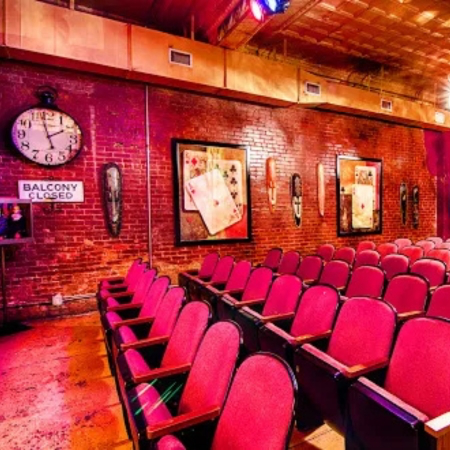
I have had people make the comment “I don’t have a huge budget to open a theater like you did.” Neither did I. My theatre chairs were twenty dollars a piece on Facebook Marketplace from a closed down theatre in Branson. Our theater space was white. We received a quote to paint the theatre black for $4000+. Instead, we went to Sherwin-Williams, bought twenty-five gallons of ProMar flat black paint for less than $500 and painted the theatre ourselves. The truss that frames the stage and holds the curtain came from a dusty old barn in Lubbock, Texas from a retired country music tour manager that once managed George Strait. I bought enough truss to outfit the entire theatre for less than $2,000. Most of my stage lighting came from Facebook Marketplace, Guitar Center, or online music supply stores. The stage was built for less than a thousand dollars.
With that being said, if I had to do it over again, I’d rather have invested in at least two high quality name brand lights with higher wattage (75+ watt) than multiple low budget moving heads. Sometimes less is more and two nice lights behind you can frame you in during a routine much better than eight low budget lights. So my advice – use budget lights for par, wash, and non-moving lights, and spend the extra dollars for nice moving head lights.
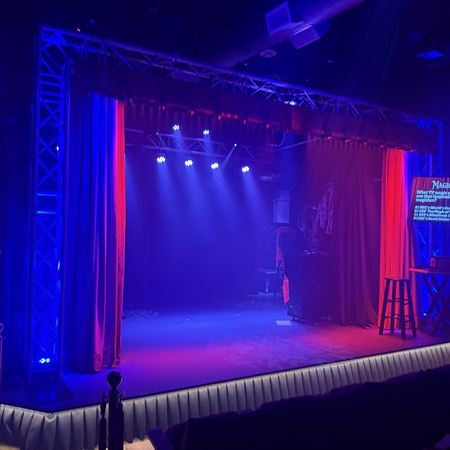
Pro Stage Tip: If building a stage use ¾” AdvanTech subfloor, then a layer of roofing felt, then put down a ½” layer of plywood, then another layer of roofing felt, and finally a nice cabinet grade ¾” plywood top. I used cabinet grade Birch. This will create a solid sounding stage. My stage feels like concrete and there are no hollow foot sounds when walking around. The last thing you want is the audience being distracted by the creaks and thuds of walking on a thin stage. Leave small penny size gaps between the top pieces to allow expansion and bolt it all down with construction screws. If you need to repair or replace a top piece in the future, you can back the screws out and make an easy swap. If you nail or glue them down, you’ll have a much harder time with future repairs.
I initially painted my stage with several coats of Rosco Tough Prime, an ultra-durable black paint made for performing art stages. It is durable but it’s not easy to keep clean. Footprints and dust show very easily. It didn’t handle mopping well. For a year I fought the stage floor to make it look nice before every show. Then a fellow theatre owner said to repaint it with Behr Scuff Defense in flat black. I took the advice and it’s so much easier to keep clean. The lesson here – call other theater owners who have gone through all the trials and error and save yourself time and money.
Design your Theatre with Magic in Mind
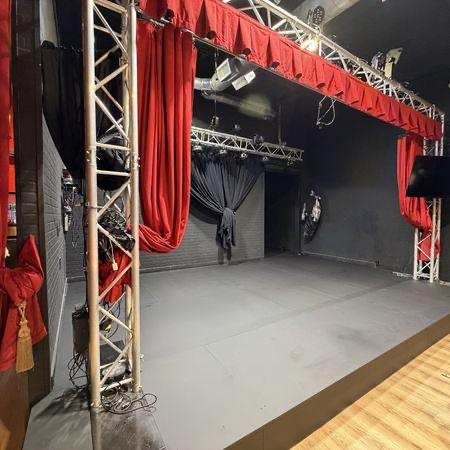
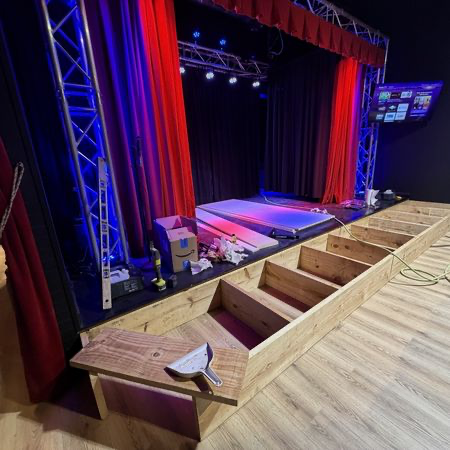
Lesson learned: It’s much easier to build what you want from the start than trying to remodel or change it in the middle of running a business. We started with a 10′ x 20′ stage with no backstage area and small side-wings that limited what we could perform. We initially sacrificed stage depth for additional lobby space. Our thought was we wanted a bigger concession and merch area. After being open a year, we realized that was wrong. We ended up extending our stage 3 feet to the front (losing a row of seating in the theatre,) and then creating a backstage wing that took up 6’ x 9’ of the existing lobby. It allowed us to fit three small illusions backstage to give our show some production value. The customers loved the remodel, and our merch and concession area didn’t suffer from losing some space. The lesson here is the focus of your initial design and layout should be stage, backstage, and audience seating. The rest will fall into place.
You Have to Keep Overhead Low
If you’re opening a magic theater, you must love magic but at the end of the day, it still must be a viable business, so it has to net a profit over time. The adage that it takes three years to start to make money does have some truth to it, and the best way to speed that up is to keep your overhead low. When we opened, I used existing magic from my current repertoire, and we didn’t hire anyone to work concession or merch. Instead, we got our own food handlers licenses, health permits, and learned to make good popcorn, (turns out there’s more to it than throwing seeds in a hopper.)
We found the best ticket platform that had the lowest fees, while allowing us to manage customer orders, events, seating, etc. We designed our own website using Wix. We watched hours of YouTube videos on SEO, web design, and social media. We signed up for free local classes on marketing, entrepreneurship, and leveraged community resources offered by local chamber of commerce groups. We learned how to program DMX lighting and use lighting cues to create lighting scenes to sync with music (QLab, LightKey, AudioApe.) We opted for bottled drinks to avoid the big start-up cost that fountain drinks have. We did have to add a basin sink room with a three-basin sink to meet health code. This would lead to us building a room that previously didn’t exist, further eating into our theatre seating. Since we were already losing a row of seating, we opted to build a second ADA-compliant bathroom next to the basin sink room so we didn’t have wasted space.
Currently, we keep our overhead to the necessities: Rent, water, electricity, internet, commercial business insurance, and a few annual permits, plus supplies used in the show. The lesson here is don’t add employees or extra costs unless it’s an absolute necessity, and you make enough to cover it and still net a profit. Two years in and we still clean our own theatre including bathrooms.
Customers care more about you than they do the magic
The biggest mental hurdle of opening a magic theatre is “Will they like the show?” The better question to ask yourself is “Will they like me?” because at the end of the show, that’s what people will remember. How you treated them. I’m going to ruffle some feathers, but I believe the magician should be greeting the audience before the show. Even if it’s a quick pass through the crowd saying hello, getting names, asking where they’re from and if they’re celebrating anything, and making connections. I spend about 10 minutes before a show doing this. I don’t greet them at the door. I wait until they’re seated and I make a quick appearance and go up and down the rows. I have successful friends who don’t abide by this but for me personally, it’s a must.
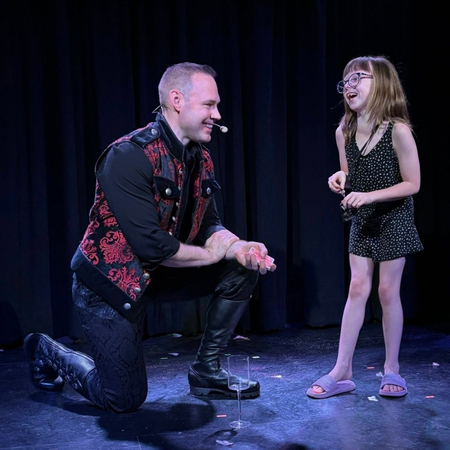
I’ve tried it both ways. I’ve stayed hidden until showtime and when the curtains open, I have to work so much harder to get the audience to like me in the first few minutes, and trust me, a few minutes is all you have before they make up their mind. I’d much rather accomplish this early. Just a quick pass through the audience may let me know who’s celebrating an anniversary, who loves magic, who is reluctantly there because their outdoor plans got rained on, plus important info I can use during the show such as names and how they’re spelled, personal interests, and so much more.
You Have to Tell a Story
There are enough essays from the great philosophical thinkers in magic that I don’t need to spend too much time here, but the show must tell a story. I don’t mean small individual stories for each routine, although they have their place. The show needs an overarching story with callbacks, high spots, periods of tension and excitement, and periods of levity in ways the audience can relate to. Even grand illusion shows with back-to-back illusions fall short of their potential, if it lacks context and story. A simple one-line setup for what the audience is about to see is sometimes enough.
The show begins when they go to your website to buy tickets
Your show may be 75 minutes, but the experience starts when they first find out about you. The first website visit, or the rack card they picked up, and your job is to make the entire experience as seamless as possible. A simple to navigate website that clearly directs them where to buy tickets. An easy-to-understand show schedule. Minimal clicks to get to the point of sale. A fast website without excessive animations. Research shows up to 53% of mobile customers will abandon a sale if the website takes longer than 3 seconds to load. Compress video and pictures, run website speed tests, and get your “first paint” website time down to one to two seconds.
Greet customers when they walk through the door. Whoever makes first contact with a customer needs to be genuinely happy to be there and must be personally invested in each guest at the show. If you read bad reviews from businesses, it’s usually because the first person they encountered didn’t make them feel special. First impressions matter. The check-in system at the theatre must be easy. We scan QR codes or check off by name using our ticket platform admin page. After the show, I’m in the lobby before the first person leaves the theater, ready to greet guests as they leave. This is my time to take photos with guests, sign merchandise and VIP lanyards, ask about their favorite moments of the show, and hear how they related to the stories. Remember, even though the show is over, the experience isn’t, until they’re safely out your door. Lastly, I have an automated follow-up email that goes out 24 hours after the show to personally thank them for attending the show and encouraging them to leave a Google and TripAdvisor review which leads to the next lesson.
The best time to collect a review isn’t while they’re walking out the door
I’ve tried QR codes on the screen and in the lobby. I’ve tried the tap NFC chips that direct to Google, but what I’ve found after 350 shows is that when people are leaving after sitting for 90 minutes, they usually have a kid in one arm, popcorn in the other, they have dinner plans in 15 minutes on the strip, and they’re trying to beat the traffic out of the parking lot, and have several other things on their mind. That is not the time for someone to leave a meaningful review. You may get reviews that way, but they’ll be short or just a rating without a written review, which isn’t good for algorithms. I want meaningful reviews with keywords that Google and AI can reference later to help with searches for when new tourists are looking for things to do in the area. I’ve found 24 hours after the show is a perfect time frame to let them get settled and put some thought into the review.
Price for the experience
Before you set your ticket prices, look at other attractions nearby and get an average of what they charge. Maybe it’s an outdoor zipline, escape room, mini golf, murder-mystery dinner, theme park, movie theater, or arcade. Then look at what you offer that is above and beyond what they do. Are the go karts $15 a person and last 10 minutes? Your show is 75 to 90 minutes of magic! It should cost more than $15 a person. Is the murder mystery dinner a three-course meal with a 60-minute investigation and several live actors that costs $60 a person? Then maybe your show should come in just under that (unless you’re offering a full dinner experience as well.) The logic can be applied to not overcharging, but mainly the point I’m trying to make is most attractions charge the same as magic shows while being a short, impersonable experience.
So, shouldn’t a longform theatrical interactive magic show cost more? You’re more valuable than a game of mini golf or an hour arcade pass, so your prices should reflect that. If anything, if your ticket prices are too low, the buyer perceives the show as having less value and there’s less incentive to attend. If the kayak trip is taking longer than expected but you only spent $15 on magic show tickets, you’re less likely to cut the trip early and head to the show. There’s no skin in the game but if you spent $40+ on a show ticket, you’re more likely to be there.
Have two of everything
This one is simple. Murphy’s law, anything that can go wrong, will go wrong. Have two of everything. Two is one, and one is none. Everything can break and everything will break eventually. I have an extra fog machine in case a fog jet goes down. I have extra stage lights in case one dies. I have a tub full of spare DMX cables of all sizes, and extra Audio Ape remotes. I even have an extra Macbook in case my Mac Mini goes down. I almost have two of every routine I perform in the show. And for the ones I don’t have two of, I keep several kinds of tape (gaffer, electrical, double sided, scotch, duct, Flex Tape) and glue (two-part epoxy, contact cement, JB Weld, E6000, and Tite bond wood glue.) I can’t tell you how many times I’ve had to JB Weld a caster that stripped out of a rolling table 30 minutes before a show, or gaffer tape a failing prop. I even keep 30 feet of curtain track cable in case our main show curtain cable breaks.
The best ROI marketing advice ever
The best marketing strategy is to take care of the employees of local businesses. What I mean by that is befriend the waitresses at the best places to eat in town. Perform magic when they wait on you. Give them show tickets. Keep up with them. Because they are the ones that tourists ask, “What’s the best thing to do around here?” Duane Laflin speaks about this in his book Succeeding With Your Own Magic Theater, describing it as “Exponential Marketing” and he’s right. Do this for all local employees. It will come back tenfold.
Finally, if you’re looking to open a magic theatre, feel free to contact me. The last thing I’ll leave you with is my list of must have books that helped me while opening my magic theatre:
Succeeding With Your Own Magic Theater – Duane Laflin
The Theatrical Illusion Show – Duane Laflin
Will It Make a Theatre? Find, Renovate, & Finance the Non-Traditional Performance Space – Eldon Elder
The Show Doctor – Jeff McBride
Notes From A Fellow Traveller – Derren Brown
Maximum Entertainment – Ken Weber
How to Win – Jon Armstrong