

Dear Friends in Magic,
Wonder is one of the most powerful tools a magician can create, but where does that feeling really come from? Is it the method, the presentation, or something deeper in the human experience? This week, mentalist, anthropologist, and storyteller Paul Draper explores the deeper roots of mystery itself. Drawing from anthropology, performance, and years of experience in front of audiences around the world, Paul examines why magic resonates so strongly with people across cultures and generations.
The Anthropology of Wonder: What Magicians Can Learn from Culture, Mystery, and the Human Mind
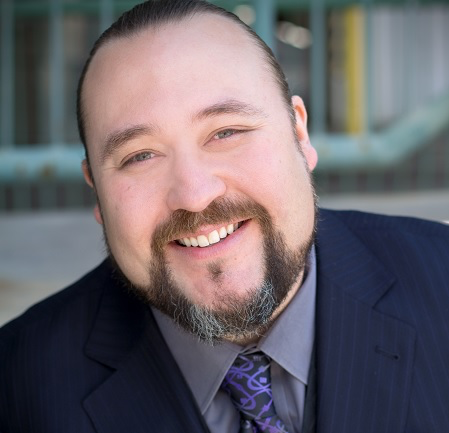
By Paul Draper
Magic is one of the oldest human arts. Long before there were theaters, television specials, or viral clips online, there were people standing before a small circle of others creating moments that defied expectations. A bone moved without touch. A prediction came true. A story revealed a hidden truth. In every culture on Earth, people have created experiences that evoke surprise, mystery, and awe.
As an anthropologist and a mentalist, I often find myself returning to a simple question:
Why does magic work on people at such a deep level? Not just mechanically, not just psychologically, but humanly. Anthropology has given me a framework that shapes the way I think about audiences and performance. Across cultures and throughout history, human beings are constantly seeking three things: Membership, Order, and Meaning.
These elements appear everywhere in human life. They shape religion, politics, art, and storytelling. And when we look closely, we discover they are also the invisible structure beneath the art of magic. When we perform magic, we are not simply demonstrating tricks–we are creating a temporary world where these three elements come alive.
Membership: The Circle of Wonder
Every magical experience begins with membership. Think about the difference between watching a trick on a phone and sitting in a small room with a magician. The moment we gather together, something changes. The audience becomes part of a shared experience. The performer invites them into a circle of wonder.
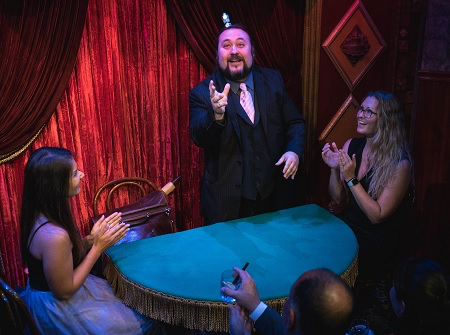
This is one reason I love performing in intimate spaces like the Close-Up Gallery at the Magic Castle. With only a couple of dozen guests in the room, something remarkable happens. The audience stops being a collection of strangers, and becomes a small community. They laugh together, react together, and they become witnesses to the same impossible events.
Anthropologists sometimes call this communitas — a shared emotional experience that bonds people together. Magicians create communitas every time we gather people around mystery. And in a world where many people feel increasingly isolated or disconnected, that simple act has tremendous value.
Order: Crossing the Threshold
Magic may appear chaotic, but it is built on a deep sense of order. Audiences arrive with expectations about how the world works. Cards remain where they are placed. Thoughts stay private. Objects do not vanish. Cause leads to effect. The magician introduces a disruption to that order.
A prediction reveals something that should be unknowable. A volunteer finds their thoughts anticipated before they are spoken. A borrowed object behaves in ways that contradict everything we know about physical reality. For a moment, the structure of the world bends, but the deeper transformation is not simply disorder–it is repositioning.
In anthropology, crossing a threshold matters. When we move from one state of experience to another, our position within the structure of society and reality changes. The person who has not experienced the mystery occupies one place. The person who has witnessed the impossible occupies another.
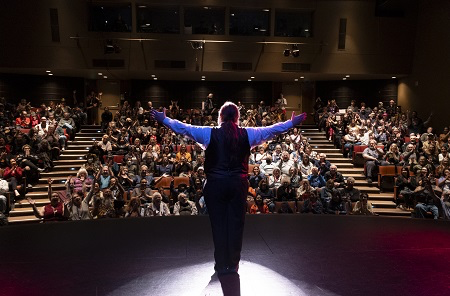
During a magical performance the audience crosses that threshold. They move from being observers of ordinary reality to participants in something extraordinary. They have now experienced something others have not. In that moment, the order of their experience shifts. They now belong to the group that knows–not the secret of the trick, but the experience of the mystery. And, once someone has crossed that threshold, the world never looks quite the same again.
Meaning: Why Wonder Matters
Of the three elements, meaning may be the most important. If magic is only about fooling people, it becomes a puzzle. But if magic connects to meaning, it becomes something deeper.
Some of the most powerful magical experiences I have witnessed had very little to do with technical complexity. Instead, they carried emotional or philosophical weight. A simple object becomes a symbol of memory, a prediction becomes a metaphor for destiny, or a mystery becomes a reminder that the world still contains the unknown.
In my own work, I often combine mentalism with storytelling about psychology, anthropology, and human perception. When people realize how easily the mind can be influenced or misdirected, they begin to understand something important about themselves. Magic becomes a mirror.
Magic in the Modern World
We live in an age where information is instantly accessible and skepticism is often celebrated. Yet paradoxically, people seem more hungry for wonder than ever.
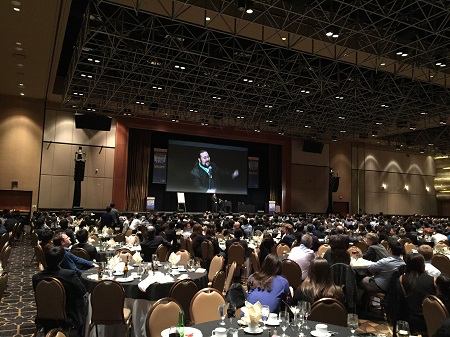
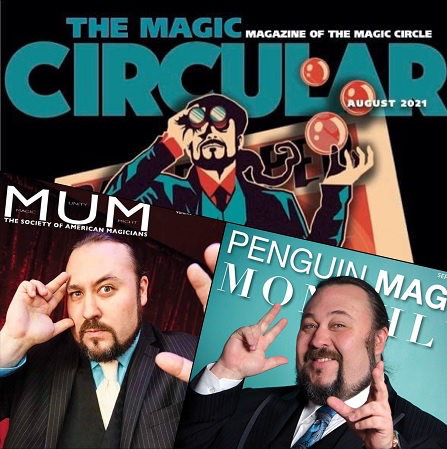
Over the past year I have had the privilege of sharing this idea in many different settings. I recently spoke and performed at the Blackpool Magic Convention, where thousands of magicians from around the world gather to celebrate the art. Shortly afterward I had the opportunity to lecture at the University of Cambridge, discussing social engineering, perception, and the psychology of deception with students and faculty in the computer science department.
The contexts were very different. One room filled with magicians, another filled with cybersecurity researchers. But, the reaction was the same. People leaned forward. They laughed.
They asked questions, and afterward many said some version of the same thing–that they had not felt that sense of wonder in a long time.
In the coming months I will continue exploring these ideas in a lecture and performance at the Portland Magic Jam, and at the Irish Hypnotherapy Conference. Different audiences, different cultures, but the same human response to mystery. Wonder, it turns out, travels very well.
A New Book About Mystery
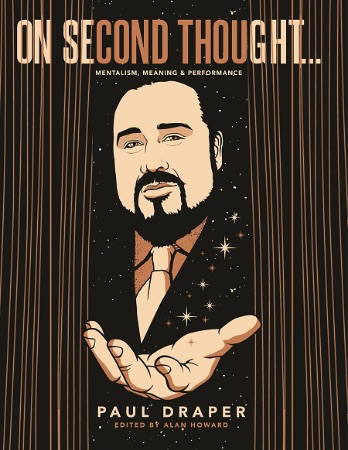
On Second Thought… Mentalism, Meaning, and Performance
https://www.kickstarter.com/projects/pauldraperbook/on-second-thought-mentalism-meaning-and-performance.
These experiences are part of what inspired my newest project, a book exploring mentalism, psychology, and the deeper art of creating astonishment. Rather than simply teaching techniques, the book explores how performers can combine psychology, storytelling, anthropology, and theatrical structure to create experiences that resonate long after the performance ends. It looks at mentalism not just as demonstrations of mind reading, but as a way to explore the mysteries of human perception and belief.
The response from the magic community has been extraordinary. The Kickstarter campaign quickly surpassed its goal, and nearly three hundred supporters stepped forward to help bring the book into existence. Even though the campaign has technically closed, the special edition is still available through Kickstarter, and magicians can still join the group of backers who will receive the first printing.
If you enjoy exploring the deeper ideas behind magic, not just methods, but why mystery matters, I believe you will find something in these pages worth studying, performing, and thinking about. On Second Thought… Mentalism, Meaning, and Performance by Paul Draper
https://www.kickstarter.com/projects/pauldraperbook/on-second-thought-mentalism-meaning-and-performance.

Keeping the Flame of Mystery Alive
One of the great gifts Jeff McBride and the Magic & Mystery School have given our community is the reminder that magic is not merely entertainment, it is a living tradition. It is a way of connecting people to creativity, imagination, and the unknown. Every time we perform, teach, or share a magical moment, we participate in that tradition. We invite someone to cross a threshold and experience the world in a new way.
And perhaps that is the real secret of magic–not the method, not the move, but the moment when someone leans forward, eyes wide, and remembers that the universe still contains mysteries waiting to be explored.
Paul Draper
https://PaulDraper.com
https://en.wikipedia.org/wiki/Paul_W._Draper